
Photodynamic Therapy (PDT) in Kerrville, TX
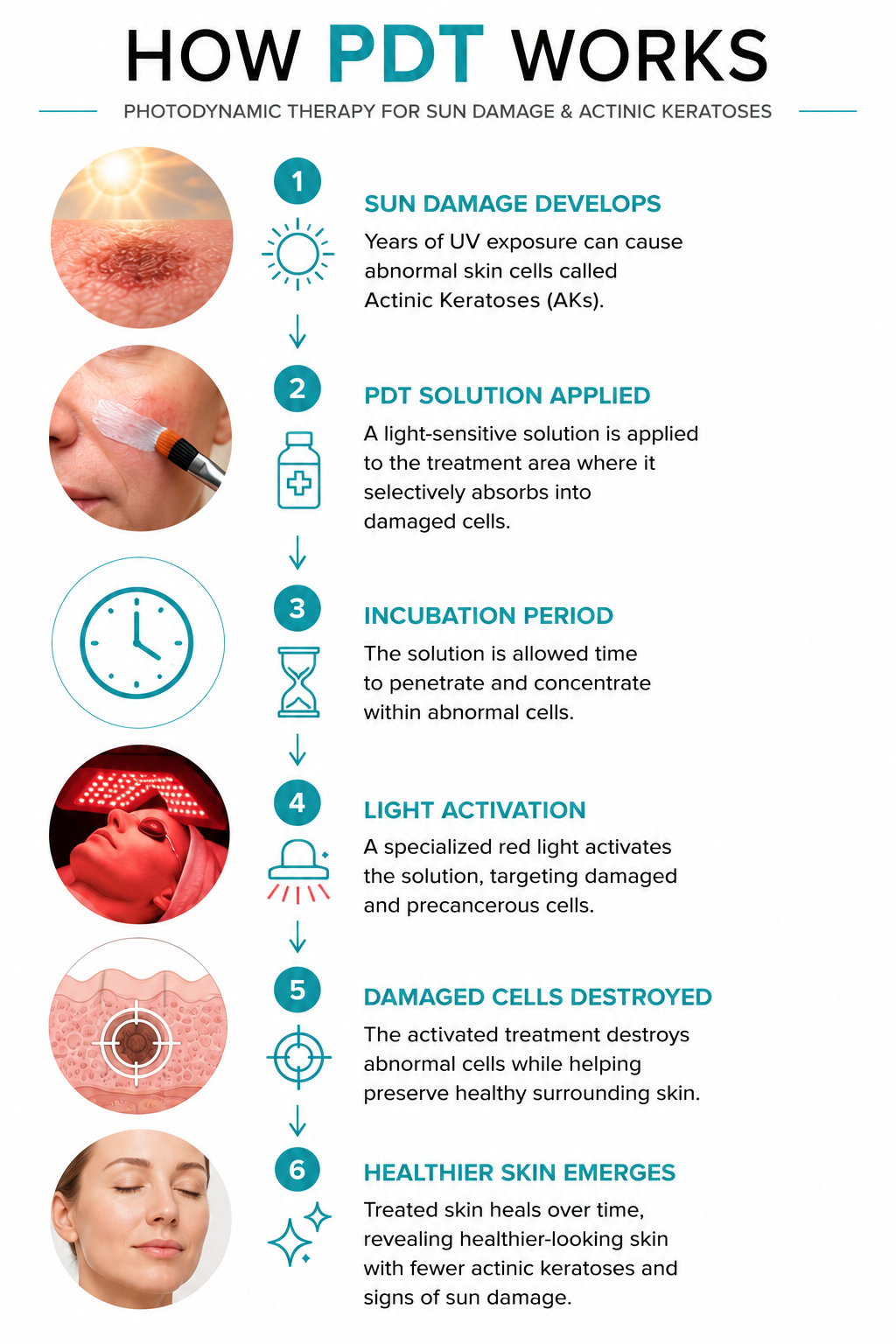
Years of sun exposure can lead to rough, scaly patches known as actinic keratoses (AKs), which are considered precancerous lesions that may develop into skin cancer if left untreated.
At Precision Dermatology, we offer Photodynamic Therapy (PDT), an advanced, non-surgical treatment that targets sun-damaged skin and precancerous cells while helping preserve healthy surrounding tissue. PDT is an effective option for treating multiple lesions at once and addressing widespread sun damage across larger treatment areas.
What Is Photodynamic Therapy (PDT)?
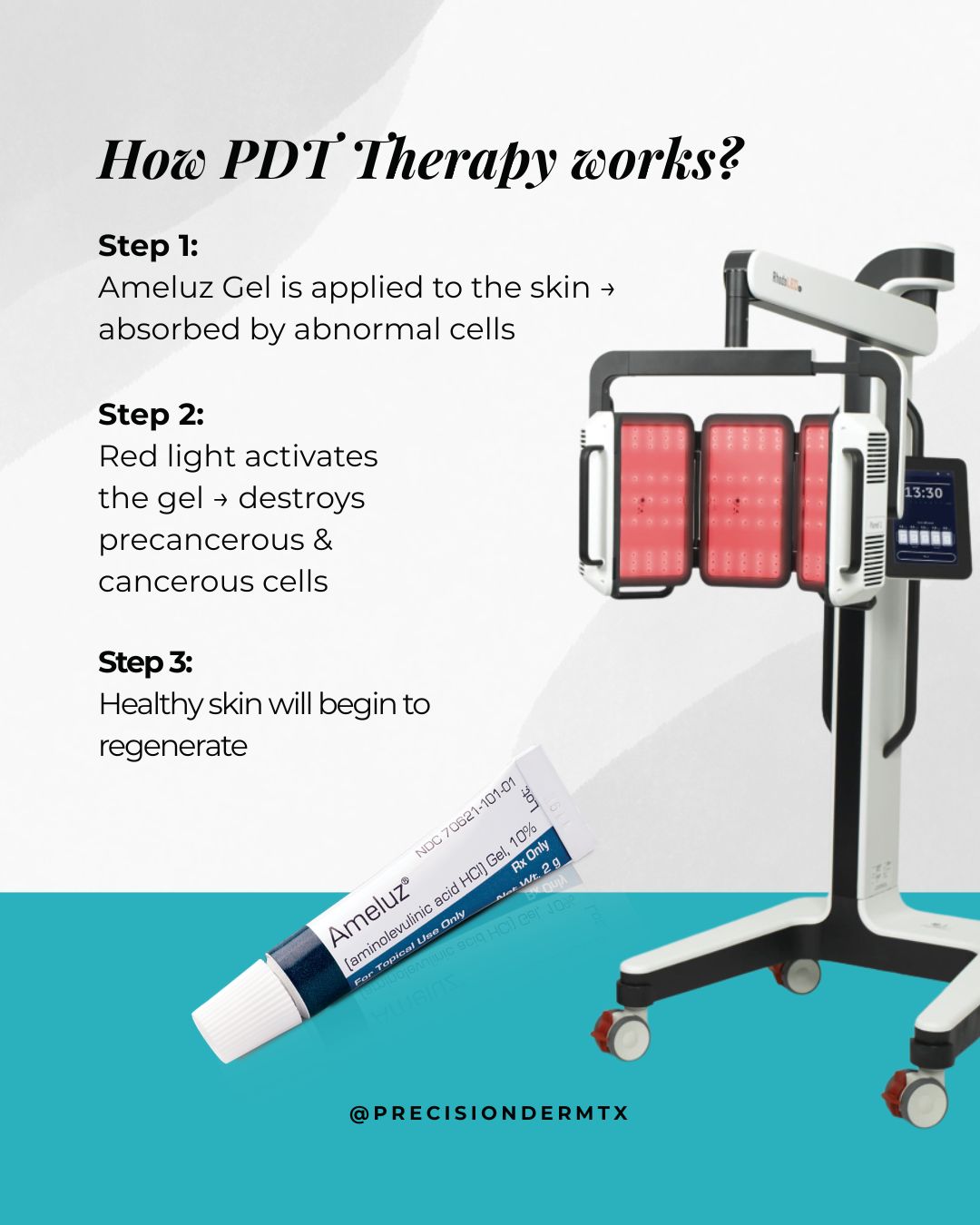
Photodynamic Therapy (PDT) is a medical dermatology treatment that combines a photosensitizing medication with a specialized red light source to selectively destroy abnormal cells.
The treatment involves applying a light-activated solution to the skin, allowing it to absorb into damaged cells, and then activating it with a specific wavelength of light. This process targets precancerous cells while minimizing damage to healthy tissue. PDT is commonly used to treat:
- Actinic keratoses (AKs)
- Extensive sun damage
- Field cancerization
- Precancerous skin lesions
What Are Actinic Keratoses?
Actinic keratoses are rough, scaly patches that develop after years of ultraviolet (UV) exposure from the sun or tanning beds. They commonly appear on:
- Face
- Scalp
- Ears
- Nose
- Chest
- Forearms
- Hands
Because actinic keratoses can potentially progress into squamous cell carcinoma, early treatment is important.

What to Expect During PDT Treatment
A typical PDT appointment includes:
Consultation
Evaluation of sun damage and treatment planning.
Medication Application
The photosensitizing solution is applied to the treatment area.
Incubation Period
The medication is allowed to absorb into abnormal cells.
Light Treatment
The area is exposed to the activating light source.
The treatment process varies depending on the treatment area and protocol used.
Recovery After Photodynamic Therapy
Following PDT, patients commonly experience:
- Redness
- Swelling
- Peeling
- Crusting
- Temporary sensitivity
These reactions are expected and indicate that the treatment is working. Most healing occurs over the following 1–2 weeks.
Important Aftercare
Patients must avoid direct sunlight and bright indoor light for the period recommended by their provider following treatment.
Concerned About Sun Damage or Precancerous Skin Lesions?
Photodynamic Therapy may be an effective option for treating actinic keratoses and widespread sun damage before they progress. Call us to schedule your appointment today at 830-890-5181
